InfraVeritas Protocol — Engineering Truth
InfraVeritas Protocol — Master Case

Bringing Trust to the Physical World
through Proof of Expertise

RWA Tokenization Infrastructure  ·  Physical Asset Verification  ·  Decentralized Expert Oracle  ·  MiCA-Ready

Architect · The Brains Behind the Protocol
Petro Sydliarchuk
Petro Sydliarchuk
Licensed Structural Engineer CC3 · Web3 Protocol Architect · Founder, InfraVeritas Protocol

A licensed structural engineer of the highest qualification class (CC3) with 25+ years of hands-on practice. Founder of construction firm PP "Barvinko" (157+ verified buildings on record). Independent doctoral researcher in hybrid blockchain architectures for construction data verification. Patent applicant, USPTO Provisional #63/876,031.

The unique combination — deep understanding of physical construction + Web3 protocol architecture + MiCA compliance — is itself Proof of Expertise in action. The mechanism described in this protocol is not theory: it was built on two decades of real engineering practice.

CC3 Licensed EngineerStructural · Civil ERC-3643 / ERC-5484ZK-Proof Architecture MiCA ComplianceUSPTO #63/876,031 DePIN · RWA · DeFi
01
Problem · Market Pain

The Trust Gap in Physical Asset Tokenization

The RWA tokenization market faces a fundamental paradox: blockchain guarantees the immutability of data — but not its truthfulness. A smart contract executes terms flawlessly, yet cannot verify whether the underlying asset actually exists.

"Garbage In — Garbage Out"
If unverified asset data enters the blockchain,
all downstream logic — tokens, credit, insurance — is built on a lie.
🔍
The Existence ProblemDoes the building / land / equipment genuinely exist in its claimed condition?
📐
The Conformity ProblemDo the technical parameters match the project documentation and declared specifications?
⚠️
The Defect ProblemAre there hidden legal encumbrances, structural flaws, or undisclosed technical defects?
02
Solution · Architecture

A Decentralized Protocol for Physical Asset Verification

InfraVeritas Protocol is the infrastructure layer between the physical asset and the blockchain. We do not tokenize assets ourselves — we provide cryptographically attested verification data that any RWA platform can use as a trusted foundation.

Licensed engineers join the network as Witness Nodes. They conduct on-site inspections, capture an evidence package and sign the verification bundle with their cryptographic wallet key.

Physical
Asset
Witness
Node
PoE
Consensus
On-chain
Attest.
RWA
Token

Output: an immutable Verification Certificate (ERC-5484 Soulbound Token), permanently bound to the tokenized asset.

03
Mechanism · Proof of Expertise

Validators Are Certified Experts, Not Random Servers

PoE is a new consensus mechanism where validation rights come from verified professional qualification — not computational power or capital.

ParameterPoW / PoSPoE (InfraVeritas)
Entry barrierCapital / hardwareLicense + reputation stake
Quality guaranteeNoneProfessional liability
Object of validationDigital transactionsPhysical real-world assets
Slashing conditionDouble-signFalse report → stake + reputation
An expert's reputation is their economic collateral.
A false report triggers financial and legal consequences.
This makes PoE more reliable than anonymous PoS voting.
04
Business Model · Scalability

100% Remote IT/Web3 Model — Zero Asset Ownership

The protocol earns exclusively on verification fees. Expanding to new markets means onboarding new Witness Nodes — no capex, no real estate on the balance sheet.

// Revenue Streams
Verification Fee
$800–2,500
MiCA Compliance Report
$1,500–2,500
Protocol API License
MRR-based
Token-gated Data Feed
Subscription
Annual Re-verification
Recurring
🌐
Scale without capexNew markets = new certified Witness Nodes. The protocol certifies engineers, not employs them.
🔗
"Chainlink for the physical world"Compatible with ERC-3643, ERC-5484, Centrifuge, RealT, DigiShares out of the box.
05
Use Cases · Real-World Applications

Your Asset Class — Our Verification Layer

Three industries where the absence of physical verification blocks tokenization or raises the cost of capital for your project.

🏢
Real Estate · RWA
Commercial Real Estate
Before issuing tokens, institutional investors demand proof: the building exists, matches its specifications, and carries no hidden encumbrances. Without verification, expect a 25–40% valuation discount or a hard pass.
Drone photogrammetry of the asset
Cross-check with cadastre & BIM model
ERC-5484 attestation linked to token
Energy · DePIN
Solar Panels & DePIN Nodes
DePIN projects tokenize generating capacity, but no oracle confirms the physical existence of the hardware. "Paper watts" fraud is a systemic risk threatening the entire DePIN market's credibility.
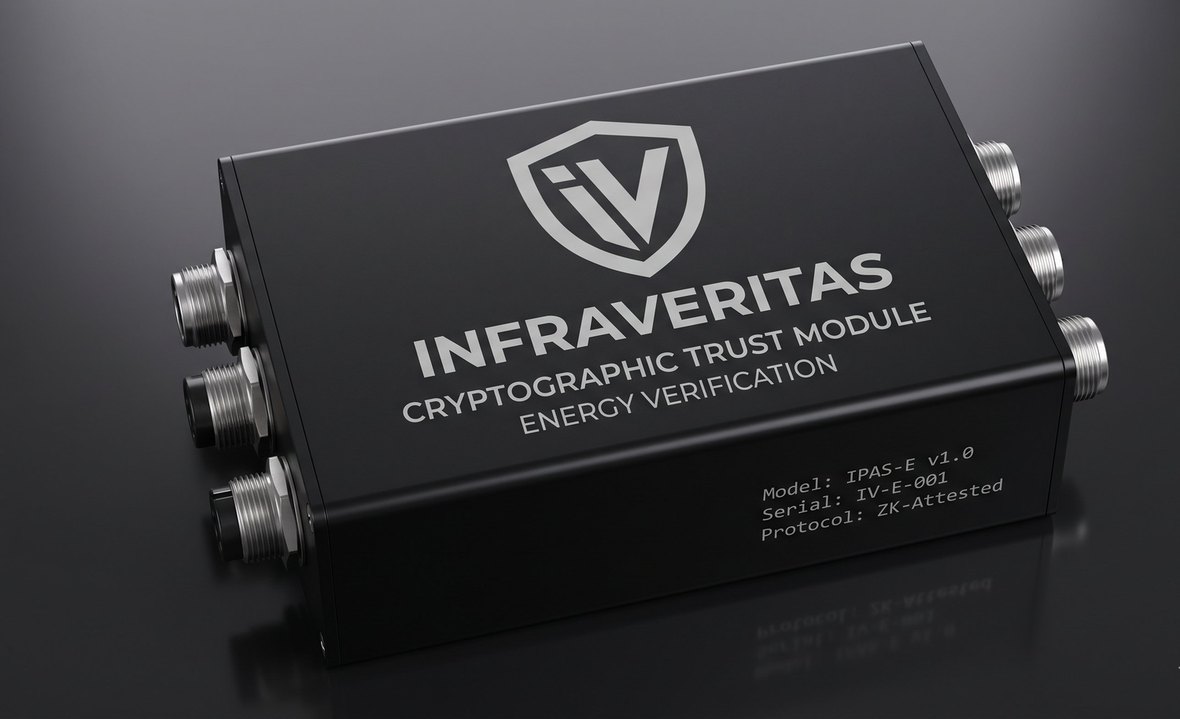
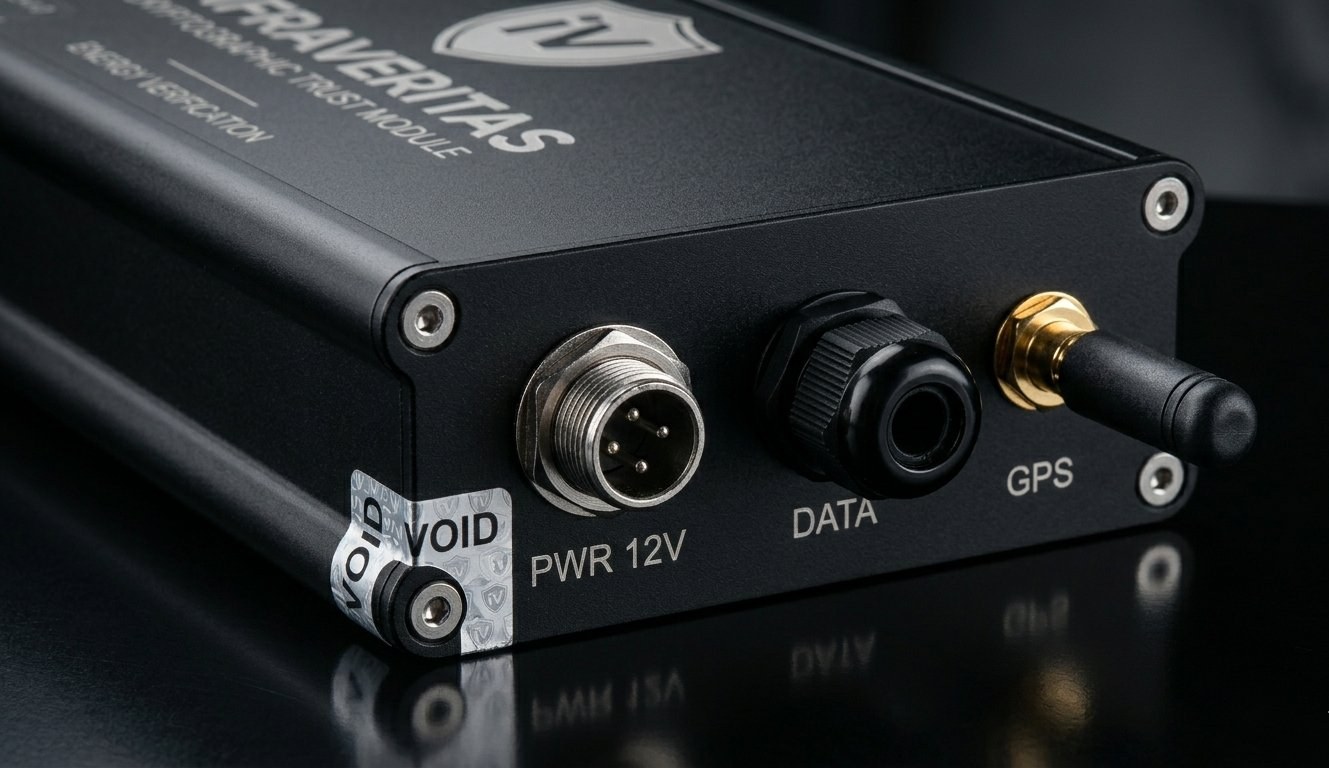
GPS + serial number verification
Equipment passport audit
On-chain proof of real output capacity
🌾
Agriculture · Land RWA
Agricultural Land
Farmland tokenization is the largest RWA segment in Eastern Europe and Latin America. Without verification, boundaries, soil class, and cultivation status are just words in a PDF — uninvestable.
Multispectral parcel boundary imaging
Cadastre & soil condition verification
Annual re-attestation for DeFi lending
06
Technology · High-Level Architecture

How Physical World Data Becomes an On-Chain Fact

A five-layer stack from field data collection to smart contract — with cryptographic guarantees at every transition.

L1 · Data Collection
A Witness Node (licensed engineer) conducts an on-site inspection. Evidence is captured via drone photogrammetry, technical measurements, and official documentation. Every file is hashed on-device inside a Secure Enclave (Apple SE / HSM) before leaving the site.
Drone PhotogrammetrySecure EnclaveSHA-256 Hash
L2 · Privacy Layer
Sensitive asset data never lands on the public chain. A ZK-proof confirms the fact ("building meets Class A standard") without revealing confidential parameters to third parties.
ZK-Proof (Groth16)Selective DisclosureIPFS (encrypted)
L3 · Signing & Consensus
The Witness Node signs the verification package with their wallet (ECDSA / ed25519). For high-value assets, M-of-N multi-signature from independent Witness Nodes is required. A fraudulent signature triggers slashing of the reputation stake.
ECDSA Wallet SignatureMulti-sig (M-of-N)Reputation Stake
L4 · On-chain Attestation
The verification certificate is minted as an ERC-5484 Soulbound Token — indestructible and non-transferable, permanently bound to the asset address. Metadata is fully compatible with ERC-3643 for regulated RWA platforms.
ERC-5484 SoulboundERC-3643 CompliantOn-chain Registry
L5 · Integration
RWA platform smart contracts query the InfraVeritas registry via a standard API / oracle interface. Compatible with Centrifuge, Maple Finance, RealT, and DigiShares. MiCA-ready: verification data satisfies due diligence under Article 22.
Oracle InterfaceCentrifuge / MapleMiCA Art.22REST API
07
Strategic Position · Market

The Only Protocol That Converts Physical-World Trust Into Machine-Readable Fact

Market

RWA tokenization is projected to reach $10T by 2030 (BCG). Every tokenized asset requires verification — once at issuance, annually for re-attestation.

Competition

No specialized decentralized physical verification protocol exists. Chainlink / API3 = digital world. Bureau Veritas = centralized Web2. InfraVeritas fills the gap.

Protection

USPTO Provisional Patent #63/876,031. First-mover advantage in a niche becoming mandatory under MiCA and Basel IV pressure on RWA asset classes.

Entry Wedge

MiCA Compliance Reviews ($1,500–2,500/report) generate first cashflow without venture capital. Every report is a live proof-of-concept of the protocol.

08
Technical Standard · Public Reference

IPAS v1.0 — InfraVeritas Physical Asset Standard

A public technical standard defining cryptographic verification of tokenized physical assets. IPAS formalizes the separation of operator and custodian roles, the Witness Node attestation flow, and ERC-3643 / ERC-5484 compliance hooks required for MiCA-regulated RWA markets.

Defines the Witness Node role, reputation staking, and M-of-N multi-signature thresholds by asset class.
Specifies cryptographic evidence structure: drone photogrammetry hashes, Secure Enclave signing, IPFS encrypted storage.
Maps directly to MiCA Article 22 due diligence and EBA/Op/2025/13 compliance requirements.
Provides ERC-3643 / ERC-5484 integration contracts: Soulbound attestation tokens permanently bound to asset identity.
Reference implementation for IPASComplianceModule — blocks transfers on missing attestation, critical condition, or geometric non-compliance.
PDF
Technical Standard
IPAS Verification Standard
Formal specification of the InfraVeritas Physical Asset Standard. Public reference document for protocol integrators, auditors, and regulators.
Published
January 2026
Version
v1.0
Status
Public Release
Reference
USPTO #63/876,031
⬇ Download IPAS v1.0 · PDF
Public domain · Cite freely · No registration required
// Partnership & Consulting
Building an RWA or DePIN Project?
I help startups design reliable verification architectures that bridge the physical world and smart contracts — from protocol specification to Technical Whitepapers and MiCA compliance packages. Real engineering judgment, not a template PDF.
✈ Message on Telegram ✉ Send an Email in Connect on LinkedIn
$1,500 – 2,500
MiCA Compliance Review
Full analysis of your RWA asset against MiCA Article 22. Investor-ready report with actionable gap remediation. Delivered in 5–7 business days.
from $3,000
Technical Whitepaper
End-to-end technical document: verification architecture, tokenomics, legal structure. Publication-ready, no revisions needed.
Custom
Protocol Architecture Consulting
From a 2-hour strategy session to full PoE verification architecture, including smart contract specification and integration roadmap.